Forefront Dermatology
Forefront Dermatology is a network of more than 230 dermatology practices across 26 states comprised of 275+ board-certified dermatologists providing best-in-class general, surgical and cosmetic dermatology care along with related laboratory services.
Challenge
With locations offering medical dermatology, cosmetic dermatology, plastic surgery, or a mix of the three, and independently operated legacy business each with their own brand, Forefront was struggling to maintain an organized portfolio where practices felt like part of the same family. With the inevitable shift towards medical aesthetics and the potential addition of a medspa business, Forefront asked us to design a brand architecture roadmap detailing various options they could employ moving forward that might help alleviate these challenges.
Approach
Because Forefront was still unsure about how and if they would be moving forward with medical aesthetics and medspa businesses, we started by creating a list of questions and addressing each of them with a different architecture model in order to drive conversation.
1.
What are the opportunities to incorporate a medical aesthetics offering inside practices?
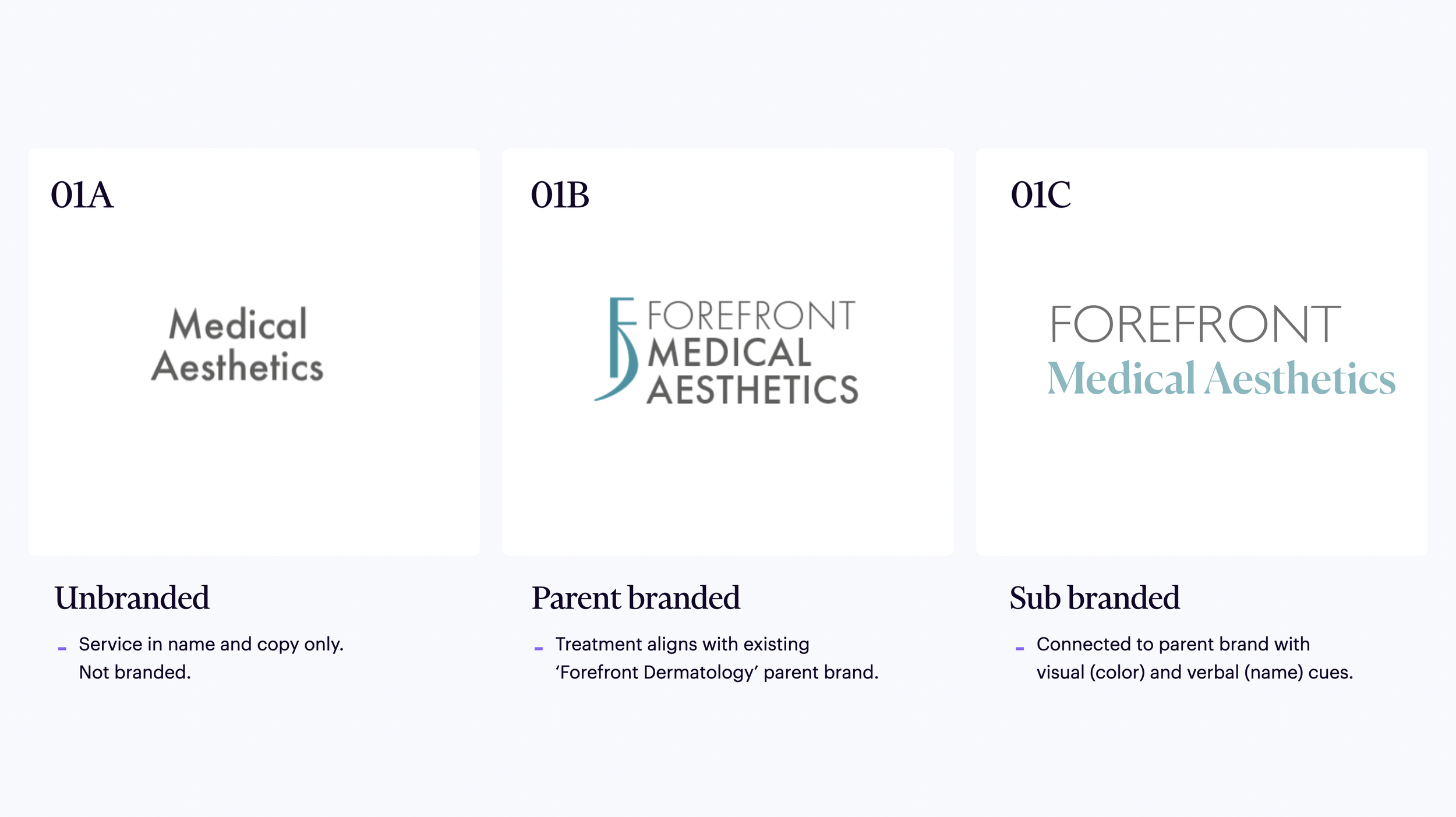
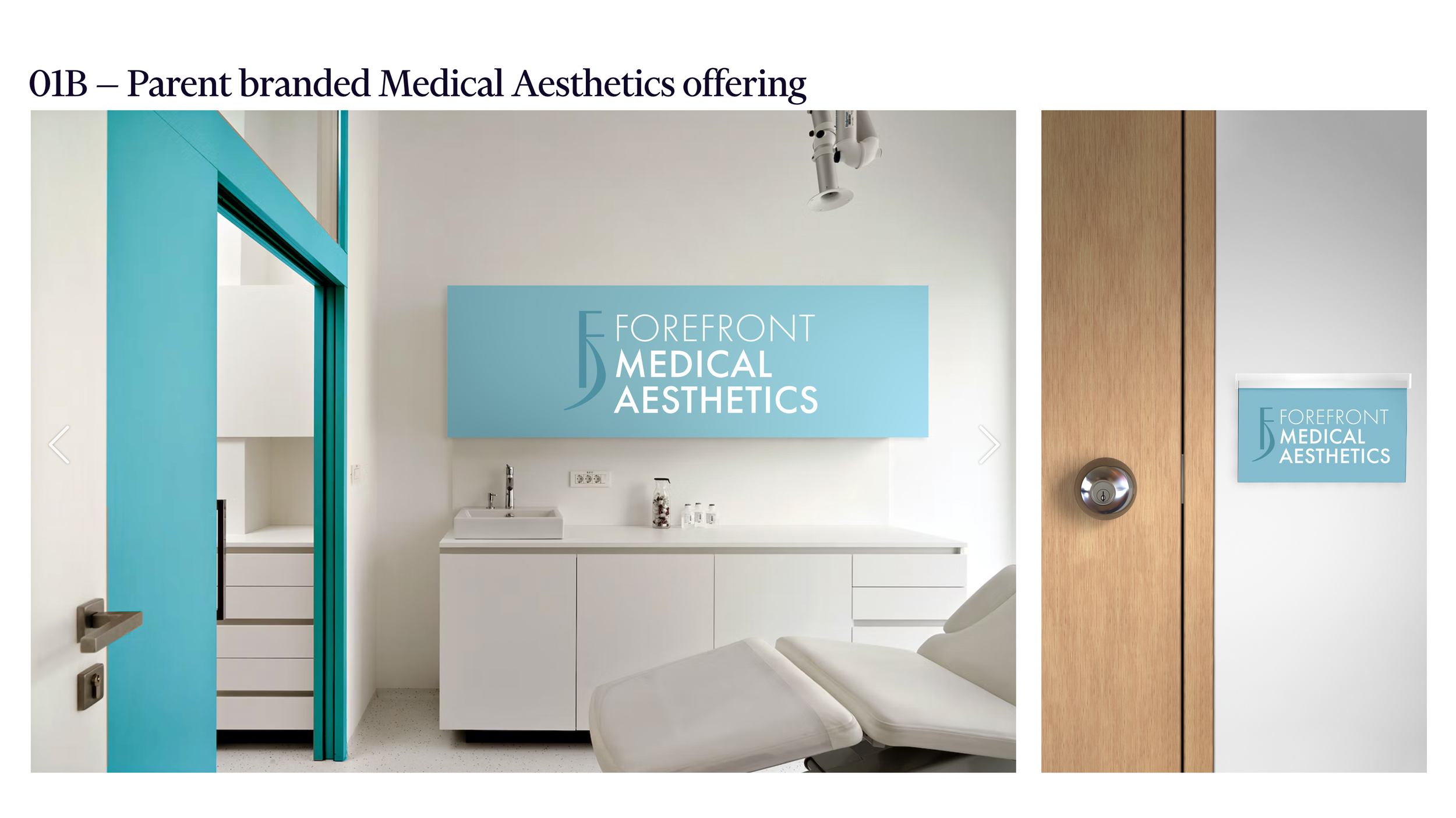
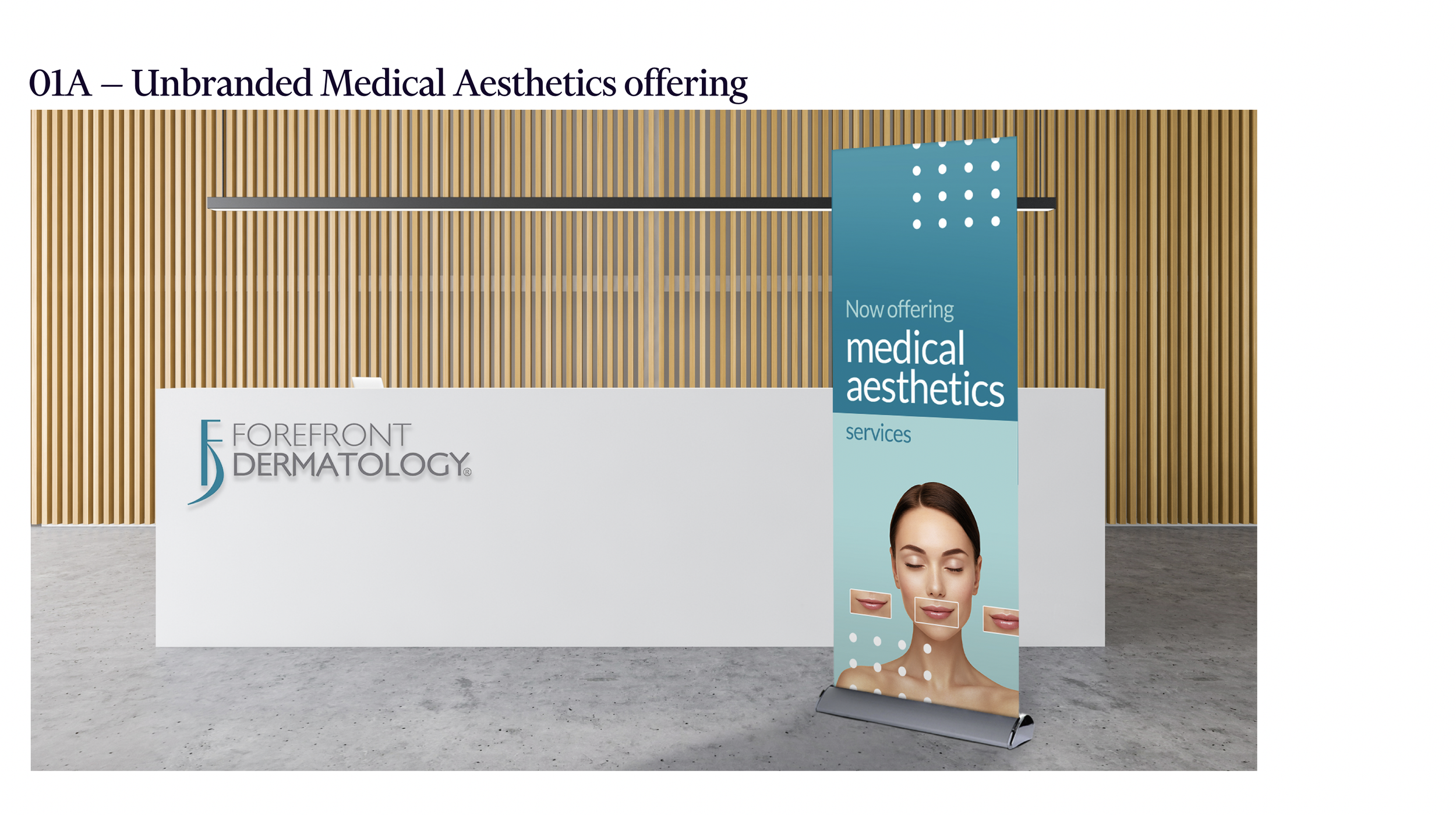
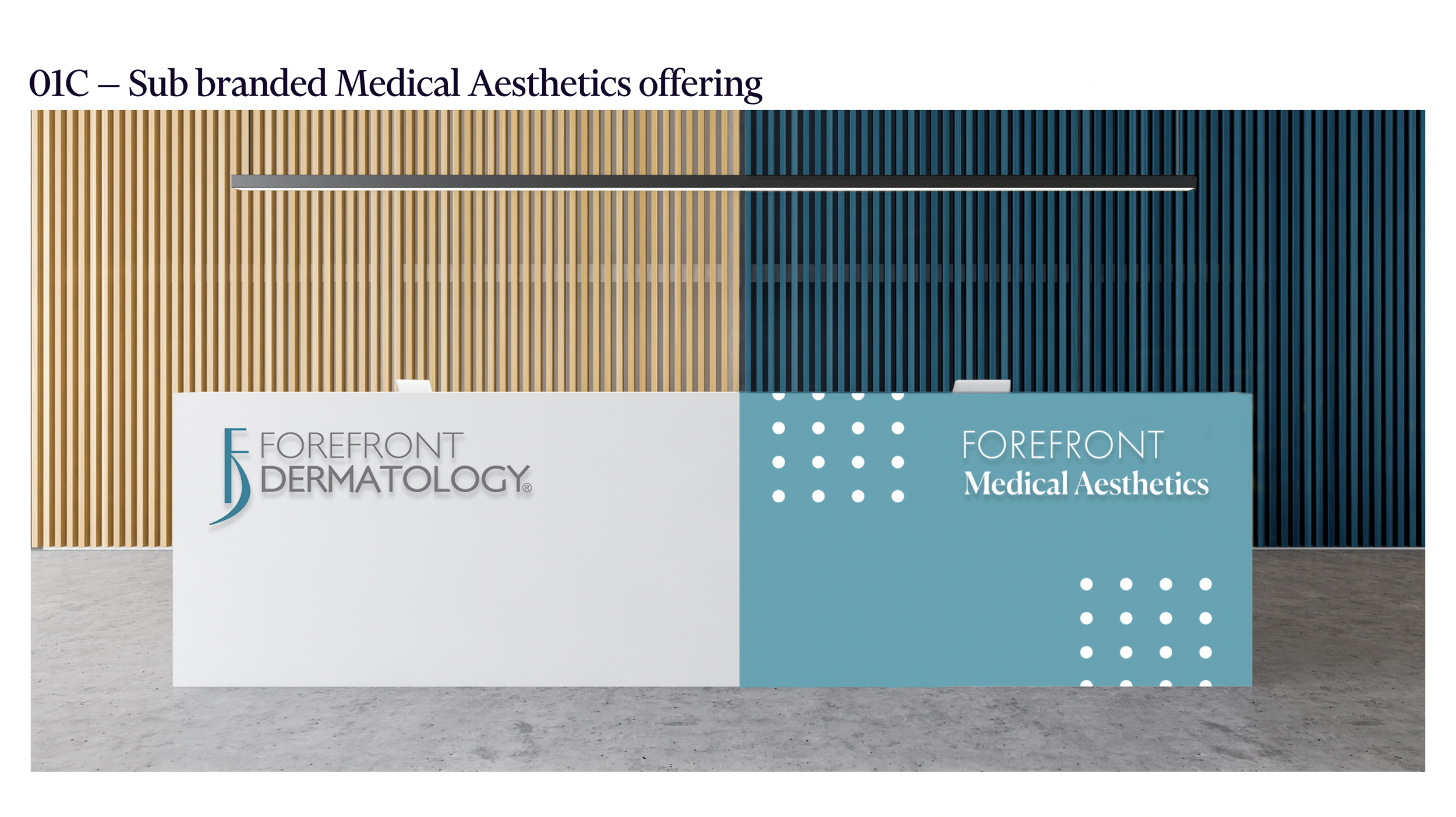
As a way of creating more consistency across practices, Medical Aesthetics could either become an unbranded or branded service offering. We then showed visual representations of the various options.
2.
How can the business future-proof its brand architecture strategy to allow for future lines of business?
For this model we organized Forefront’s offering into distinct categories—Dermatology, medspa, plastic surgery, and a placeholder for any new line of business they may add in the future (e.g. vein care)
3.
If the parent brand name is too narrowly defined, how can we expand to allow for growth?
In this model we explored dropping the word dermatology from the parent brand name, in order to allow easier growth into new lines of business.
4.
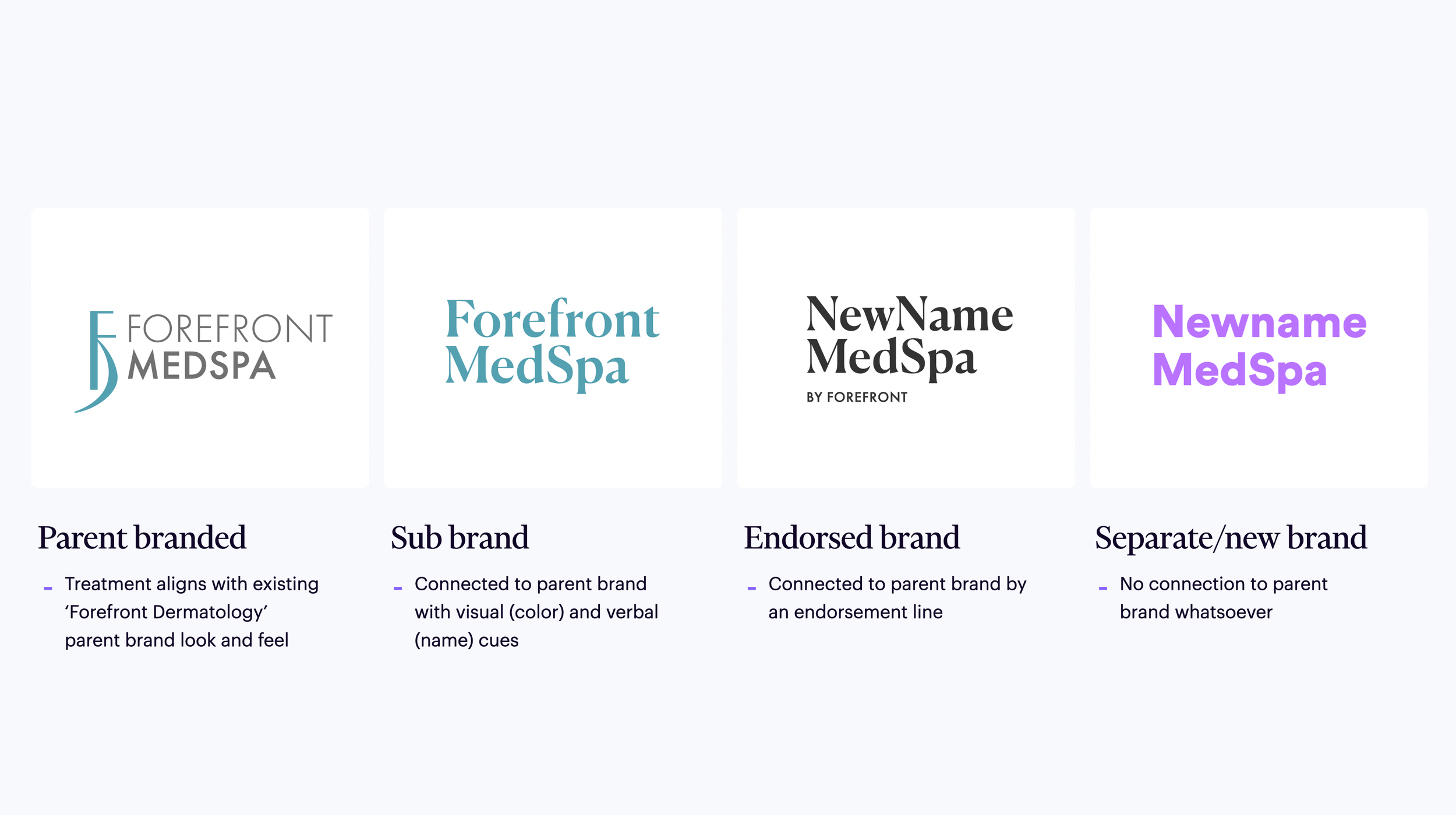
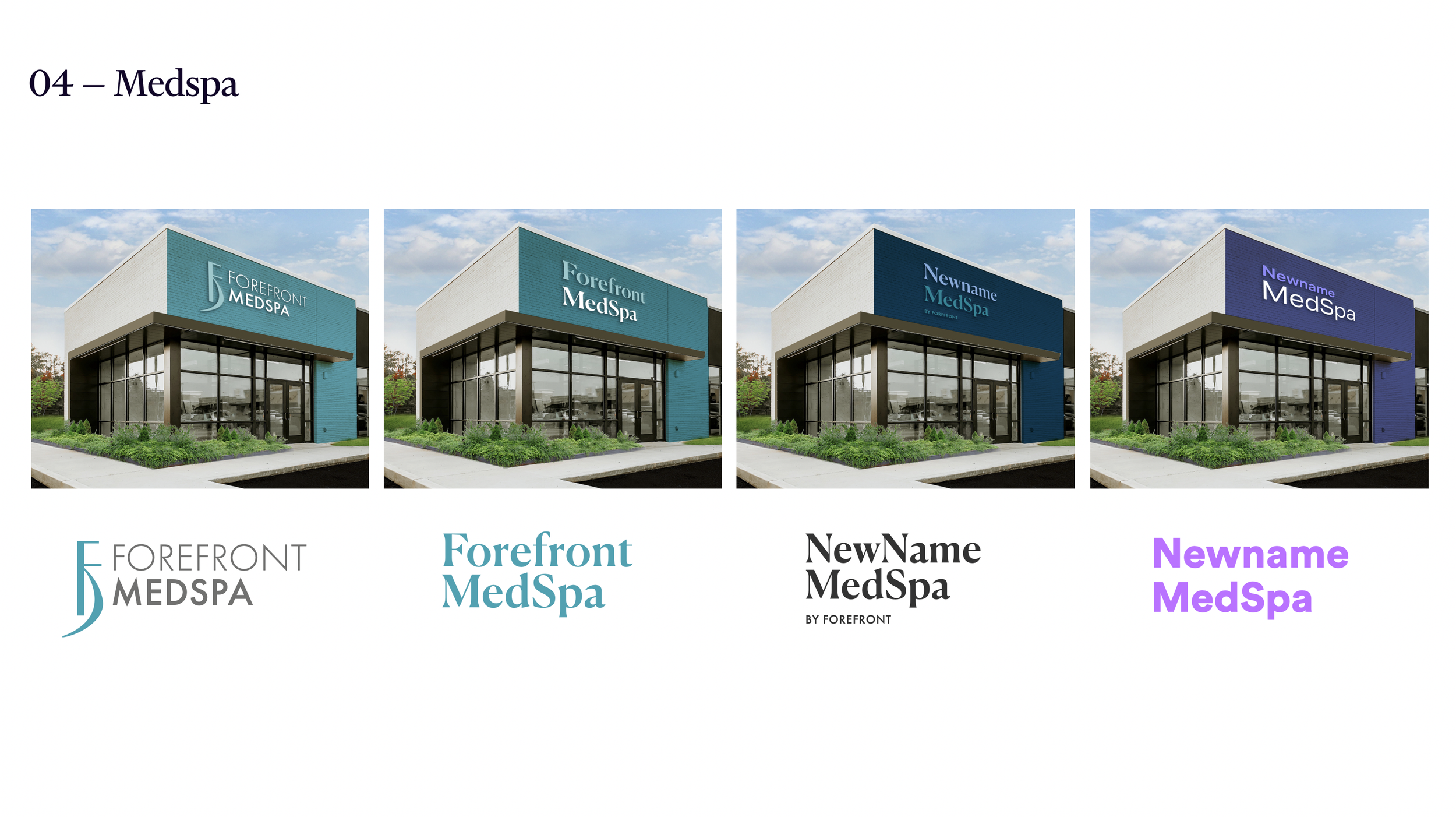
If the appetite is to offer a free-standing medspa, will the existing brand appeal to new audiences?
In this model we explored the potential of a new medspa brand and whether or not it should relate to the existing parent branding. We also created visual examples to show the various ways a medspa brand could look, whether close-in to the parent brand, endorsed, or an entirely separate visual identity.
5.
What happens when you refresh or rebrand across all market-facing operations and services?
This model gives an illustrative example for what could happen if the company chose to do a full rebrand. The idea is to radically simplify and differentiate by line of business, while giving legacy business the option to upgrade to the new branding or maintain their existing brand with the addition of Forefront endorsement line.
6.
Could Forefront evolve
into a branded house model in the future?
Despite legacy practices being independently operated, Forefront executives had expressed wanting a more unified brand, so we presented the branded house model as a long-term solution that could be achieved as physicians retire and legacy practices are no longer bound to their original name. In this model, lines of business all use the same logo but are differentiated by color, with the option to further differentiate by adding the physician’s name (as a potential incentive for legacy practices to adopt the new brand identity.